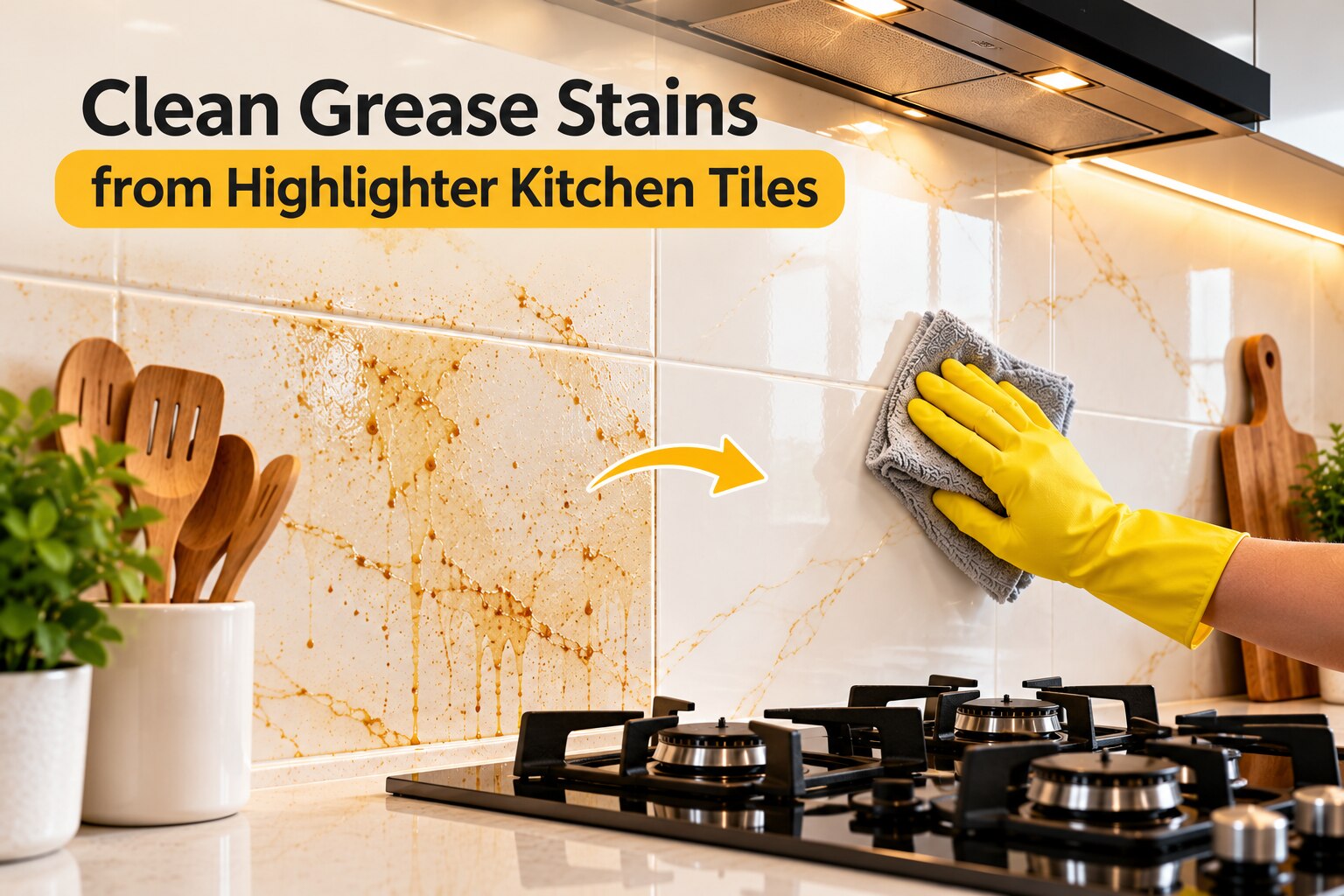
Grease does not stay only on the visible tile face: it collects in textured recesses, grout joints, bevels and silicone edges. By identifying the surface and the stain first, then using the right cleaner, dwell time, agitation and rinse, you can remove cooking oil without dulling a decorative finish or etching stone.
Key takeaways
- Lift excess oil before using water on grease stains.
- Use a pH-neutral detergent and test it on an unseen tile area.
- Treat grout with a soft brush instead of spreading grease across joints.
- Specify professional cleaning when grease has penetrated porous stone or grout.
Identify the Tile Surface and the Type of Stain First
Grease stains on kitchen tiles usually leave a translucent, slippery film that smears when rubbed with a dry white paper towel. Dust sticks to the mark, while plain water spreads it instead of lifting it. Blot or lift excess oil first; wiping immediately with a wet cloth pushes grease into grout joints.
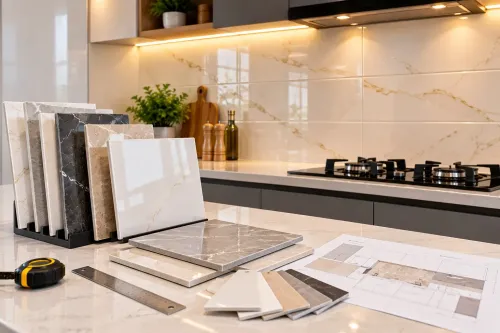
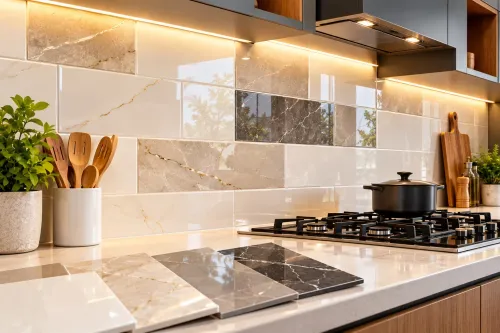
“Highlighter” describes a decorative tile, not one specific material. Identify the tile body, surface coating, printed pattern, metallic detail and grout before choosing a cleaner.
| Surface | Cleaner the surface can tolerate | Avoid |
|---|---|---|
| Glazed ceramic or porcelain | Neutral or mildly alkaline tile cleaner, diluted as directed | Strong acids and abrasive powders |
| Glass tile | Neutral cleaner and a soft microfiber cloth | Scouring pads and gritty powders |
| Marble or limestone | Stone-safe, pH-neutral cleaner | Vinegar, lemon, bathroom descaler and acidic degreasers |
| Metallic, printed or coated tile | Product approved for that finish after a hidden-spot test | Solvent, bleach or strong alkaline cleaner without approval |
| Textured tile | Diluted neutral or mildly alkaline cleaner with a soft nylon brush | Metal brushes and aggressive scrubbing |
Test the proposed cleaner on an inconspicuous tile edge. Leave it for the stated dwell time, rinse completely, and check for colour transfer, dullness, tackiness or softened coating after drying.
For a service, request the tile and grout identification, product SDS and technical sheet, test-patch result, dwell time, agitation method, rinse method and written before-and-after acceptance criteria.
Use This Sequence for Fresh and Set Grease
Fresh grease comes off most easily when you lift it before adding water; soaking it first spreads oil into grout, bevels and textured recesses.
1. Blot fresh oil with disposable paper or a dry absorbent cloth. Press and lift rather than wiping sideways.
2. Mix warm water with a few drops of dishwashing liquid. Dampen a microfiber cloth, wring it nearly dry, and wipe the tile face.
3. Leave the diluted cleaner for 2 to 5 minutes. This dwell time loosens the grease instead of forcing you to scrub hard.
4. Agitate the surface with a soft nylon brush, scrubbing across the texture and then at right angles. Work into recessed patterns, mosaic joints, silicone edges and bevels.
5. For older, sticky grease, apply a tile-safe mildly alkaline degreaser or a thin baking-soda-and-water paste. Follow the product’s dilution and dwell time; keep the product wet, then brush gently. Repeat once rather than using a harsher chemical.
6. Rinse twice with clean water, changing the cloth between passes, then dry with a clean microfiber cloth. Residual detergent traps suspended soil and leaves a dull film.
This sequence will clean oily highlighter tiles without pushing grease into the joints. Avoid vinegar, lemon juice and bathroom descaler on marble or limestone; acid can etch the stone even after removing the grease. Use a pH-neutral stone cleaner instead, and arrange a poultice treatment when oil has absorbed below the surface.
Choose Materials That Match the Finish
Glossy, printed, metallic and textured tiles need different cleaning materials: match the cleaner’s strength and the tool’s abrasiveness to the surface, not just to the grease.
| Finish | Water and cleaner | Cloth or brush | Avoid |
|---|---|---|---|
| Glossy glazed ceramic or porcelain | Warm water with a few drops of dishwashing liquid, or a diluted neutral to mildly alkaline tile cleaner | Microfiber cloth; soft nylon brush for joints | Scouring powder, steel wool and rough scrub pads |
| Printed or coated tile | Warm water and diluted dishwashing liquid; use a commercial degreaser only if its label permits printed or coated surfaces | Soft microfiber cloth; soft nylon brush used lightly | Baking-soda scrubbing, strong solvents and prolonged soaking |
| Metallic accent | Warm water with diluted dishwashing liquid | Clean microfiber cloth only; use a cotton swab in narrow recesses | Abrasive powders, acidic cleaners and stiff brushes |
| Textured tile, bevels or mosaics | Warm water with a neutral or mildly alkaline cleaner | Soft nylon brush, moving across and along the recesses | Hard bristles that catch edges or strip a coating |
| Marble or limestone | Warm water with a stone-safe, pH-neutral cleaner | Microfiber cloth and soft nylon brush | Vinegar, lemon, descaler and alkaline degreasers |
Use baking soda only as a gentle, brief paste on unprinted glazed ceramic or porcelain after a hidden-spot test. Scrub recessed areas in two directions, then rinse with clean water; residue can leave a haze that looks like grease. Dry with microfiber.
Treat Grout, Marble and Delicate Details Without Damage
A “highlighter” tile may be glazed ceramic, porcelain, glass, natural stone or a mixed mosaic, so change the cleaner at each material boundary. For marble, use a stone-safe, pH-neutral cleaner; vinegar, acidic descalers and abrasive powders can etch or dull the surface.
Adjust the method for these areas:
- Cement grout: Apply diluted cleaner with a soft nylon brush, working along the joint and across it. Rinse with clean water, because dried detergent can leave a greasy-looking film.
- Epoxy grout: Follow the grout manufacturer’s technical data sheet. Use its specified maintenance or epoxy-residue cleaner; abrasive powders can scratch or cloud the joint.
- Mosaic joints and recessed details: Work with a small soft brush around bevels, texture, silicone edges and narrow joints. Grease trapped there will remain after wiping the tile face.
- Metallic prints and protective coatings: Use the least aggressive approved cleaner, short dwell time and light pressure. Test an unseen patch first; a strong degreaser can soften, streak or lift a coating.
If grease has entered porous marble, ordinary wiping will not pull it out. Use a stone poultice designed to draw oil from the stone, and follow its application and removal instructions.
For kitchen backsplash stain removal, do not seal over an active grease mark: clean, rinse and dry the area first, then confirm the sealer suits that stone.
When a Professional Cleaning Specification Is Worthwhile
A professional specification is worthwhile when grease has entered textured recesses, grout, silicone edges, or a decorative coating. Tell the tile cleaning service in Pimpri Chinchwad that you need a written method, not a generic promise to remove grease stains from highlighter kitchen tiles in Pimpri Chinchwad.
Ask for:
- A site inspection identifying the actual tile, surface finish, grout, stone, and any protective coating.
- The cleaner’s product SDS and technical sheet, confirming compatibility with that material.
- A test patch in a hidden area, with approval before full application.
- A method stating cleaner dilution, dwell time, non-abrasive pad or soft nylon brush, and two-direction agitation.
- A clean-water rinse method that removes suspended grease and detergent from joints and recesses.
- Before-and-after acceptance criteria, such as no visible oily film, no residue in grout lines, and no change in gloss, colour, or metallic detail.
Shreya Marble can help you confirm the tile’s material and finish from its product information before a contractor selects chemicals.
Prevent repeat staining by asking the cleaner to include grout, bevels, mosaic joints, and silicone edges rather than treating only the tile face. Wipe cooking splashes promptly, lift excess oil with dry absorbent paper before wet cleaning, and rinse and dry the area after degreasing. Avoid abrasive powders, steel wool, and acidic descalers.
Related product
 | Kitchen Tiles Elevate Your Kitchen with Statement Style Highlighter tiles are the ultimate secret weapon for creating an impactful, custom-designed kitchen... View product → |
Frequently asked questions
How do you remove fresh grease stains from highlighter kitchen tiles?
Blot or lift excess oil with a dry absorbent material first. Apply a small amount of mild dish detergent diluted in warm water, wipe with a soft cloth, rinse with clean water, and dry the tile.
How do you clean set grease from oily highlighter tiles?
Use a pH-neutral tile cleaner or diluted dish detergent, allow it to sit briefly, then work with a non-abrasive cloth. Repeat the treatment rather than using a harsh abrasive pad.
How should you treat grease on grout, marble, or delicate tile details?
Keep cleaner off unsealed marble and test every product in an inconspicuous area. Clean grout with a soft nylon brush and limited moisture, then rinse and dry without flooding the joints.
When is professional kitchen backsplash stain removal worthwhile?
Use a professional cleaning specification when grease has entered porous stone, unsealed grout, textured tile, or large commercial backsplash areas. Request the proposed cleaner, dwell time, agitation method, rinsing process, and surface-safety test.
Keywords