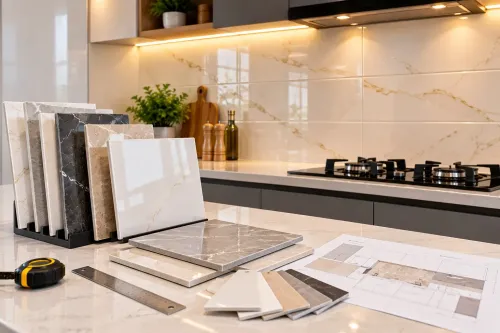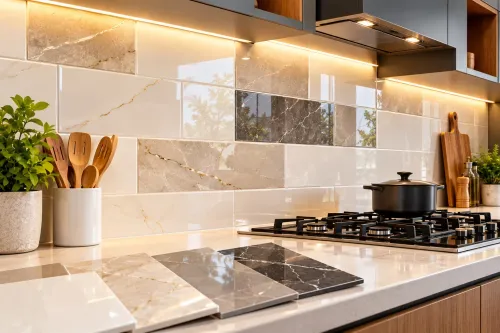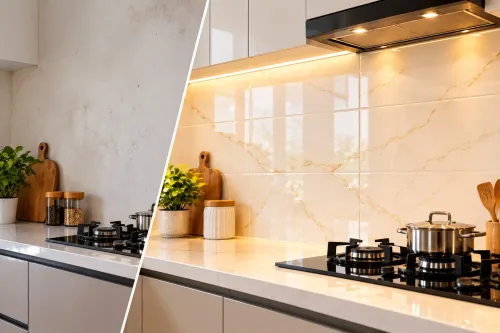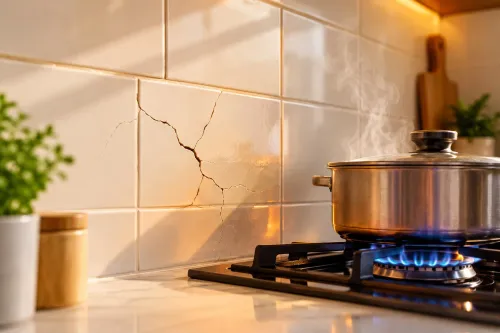
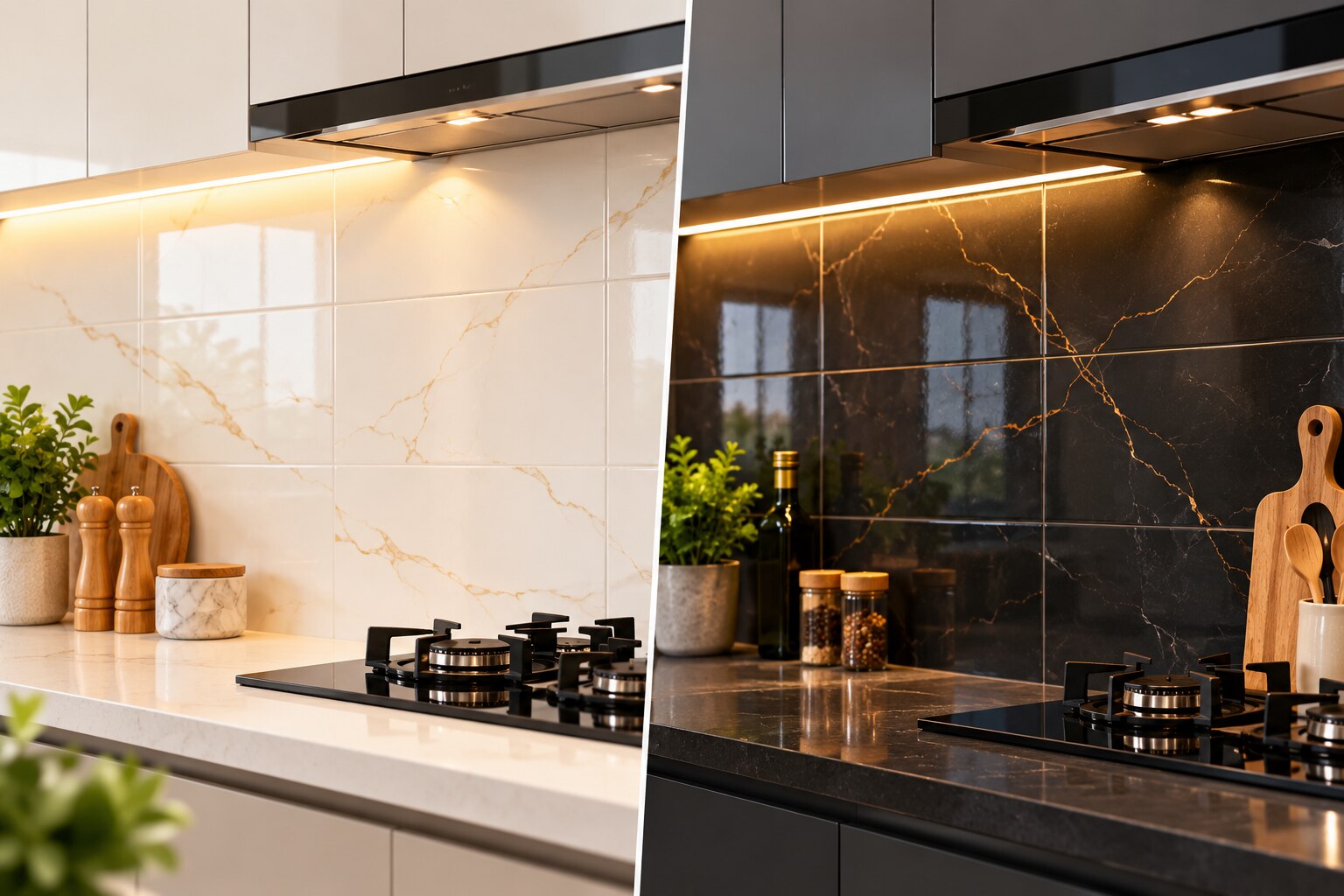
The better choice depends on daylight, kitchen width, cooking intensity, cabinet colour and how much cleaning you want the wall finish to reveal. By comparing light and dark surfaces, testing samples under real lighting and matching the tile to grout and placement, you can choose a finish that looks intentional without becoming difficult to maintain.
Key takeaways
- Choose light tiles for compact kitchens with limited daylight.
- Use dark highlighter tiles to create a strong backsplash focal point.
- Compare tile finish with cabinet colour, grout and countertop material.
- Check artificial lighting before selecting dark tiles for a narrow kitchen.
Light vs Dark Kitchen Tiles: What Changes in the Room
Light vs dark kitchen tiles change the room before they change its style. Light highlighter tiles reflect more daylight and artificial light, making a compact kitchen feel broader and airier. Dark tiles absorb more light, giving the backsplash stronger visual weight and making narrow walls appear closer.
| Option | Perceived size | Brightness | Warmth | Visual weight |
|---|---|---|---|---|
| Light highlighter | Expands the wall | Reflects light; feels brighter | Warm beige feels welcoming; cool white feels crisp | Looks lighter and quieter |
| Dark highlighter | Compresses the wall | Needs stronger, well-placed lighting | Charcoal, brown or deep blue feels rich and intimate | Creates a bold focal point |
The difference is strongest in kitchens with limited daylight. A pale tile can soften shadows, while a dark glossy tile can turn one unlit corner into a heavy block. In a large or open-plan kitchen, that weight can anchor the cooking zone instead of making the room feel cramped.
Colour also changes what you notice during cleaning. Dark glossy surfaces reveal white hard-water scale, flour dust, fingerprints and oil smears quickly. Very light glossy tiles make turmeric, tea, tomato and grease marks stand out; neither colour is inherently more stain-resistant.
For light or dark highlighter kitchen tiles for homes in Pimpri Chinchwad, judge the sample under the kitchen’s actual warm and cool lights, then wet it. Wetting reveals water marks, shade variation, surface relief and grout contrast that dry showroom lighting can hide.
A dark accent usually feels more balanced as a band, niche or cooking-zone panel than across the entire backsplash.
When Light Kitchen Wall Tiles Suit PCMC Homes Better
Choose light kitchen wall tiles in Pimpri Chinchwad when daylight is weak, the backsplash is narrow, or west-facing windows bring glare and heat without evenly lighting the room. Pale tiles reflect available light, make upper cabinets recede, and prevent a compact kitchen from feeling visually crowded.
| Kitchen condition | Better tile decision | Why it works |
|---|---|---|
| Poorly lit or compact | Light tile with satin finish | Reflects light without mirror-like glare and reduces visual weight |
| West-facing or heat-exposed | Warm white, beige or light greige | Softens harsh afternoon contrast; the tile will not reduce actual heat |
| Dusty, irregularly wiped kitchen | Light tile with mid-tone grout | Dust is less conspicuous than on dark glaze, while grout avoids an always-white cooking zone |
| Strong cooking stains | Choose by cleaning routine, not colour | Turmeric, tea, tomato and grease show clearly on very pale glossy tiles |
For light or dark highlighter kitchen tiles for homes in Pimpri Chinchwad, specify tile colour and grout colour separately. A pale tile does not need white grout; light grey or greige grout hides cooking-zone darkening better.
Inspect the sample under the kitchen’s actual warm and cool lights, then wet it. Dry showroom lighting can conceal shade variation, surface relief, grout contrast and water marks. Choose satin or matte when west glare is uncomfortable, and correct uneven plaster before installing large-format tiles; fewer grout lines will not hide wall undulations.
Where Dark Highlighter Tiles Work—and What They Reveal
Dark highlighter kitchen tiles in PCMC work best when the kitchen has strong task lighting, lighter cabinets and enough wall width to carry visual contrast. Glossy dark glaze adds depth behind a pale counter, but it also exposes white hard-water scale, flour dust, fingerprints and oil smears sooner than a mid-tone or light surface.
Use under-cabinet LEDs with even coverage rather than one bright spot. Reflected light can reveal wiping marks, lippage and uneven grout lines, while a narrow backsplash can look visually heavier. Limit the dark accent to one of these locations:
- A narrow contrast band
- A recessed niche
- A defined cooking-zone panel
Dark tiles do not resist stains better. Their advantage is visual drama; their cost is more frequent appearance-based cleaning. Wipe grease near the hob after cooking with a soft cloth and a pH-neutral cleaner, then remove water with a dry cloth to prevent mineral marks. Avoid abrasive pads, which can dull a glossy glaze.
Approve the light vs dark kitchen tiles combination under the actual warm and cool lights used in your kitchen. View the sample dry and wet, because water can expose shade variation, surface relief and grout contrast hidden by showroom lighting.
For a gas hob, follow the appliance maker’s clearance and backing requirements; tile cannot replace a suitable heat-resistant backing. Reject raised projections that interfere with pan handles, hood grease paths or cleaning access.
Match the Tile to Its Placement, Finish and Surrounding Materials
A backsplash is the safest place for a highlighter: use it behind the hob, sink, niche or as a narrow vertical strip rather than covering every wall. Dark highlighter kitchen tiles pcmc buyers choose for contrast can make a narrow kitchen feel heavier, while a full-height dark panel demands stronger lighting and careful cleaning.
- Choose a satin or matte finish for the cooking zone if fingerprints, oil smears and water marks would annoy you. Gloss reflects light and wipes clean quickly, but dark gloss shows hard-water scale, flour dust and fingerprints sooner.
- Use large-format tiles to reduce grout lines, but flatten the wall first; thin accents reveal undulations and adhesive ridges. Reserve small tiles for niches, borders or feature bands.
- Specify grout separately from tile colour. Mid-grey grout hides cooking deposits better than white grout beside pale tiles; match the grout width to the tile manufacturer’s recommendation.
- View the sample under your actual warm and cool lights, then wet it. Dry showroom lighting can hide shade variation, relief and water marks.
| Material | Pairing that usually works | Avoid |
|---|---|---|
| Cabinets | Dark tile with light oak, cream or white; light tile with walnut, charcoal or coloured laminate | Matching dark tile and dark cabinets in a narrow kitchen |
| Countertop | White, beige or pale quartz beside dark tile; grey or stone-look surfaces beside light tile | Busy veining against a patterned highlighter |
| Flooring | One shade quieter than the wall tile | A second strong pattern |
| Hardware | Black or brass repeated in lighting and handles | Mixing several metal finishes |
| Wall paint | Warm off-white with warm tile; soft grey with cool tile | Stark white beside a warm beige tile |
A Practical Choice Guide for Kitchens Across Pimpri-Chinchwad
For a compact or poorly lit kitchen, choose light; for a premium open-plan kitchen, use dark as a controlled accent rather than a full backsplash. The light vs dark kitchen tiles decision should also account for cleaning: dark glaze reveals hard-water scale, flour, oil and fingerprints, while pale glaze exposes turmeric, tea, tomato and grease.
| Approach | Best fit | Practical limit |
|---|---|---|
| Light highlighter | Small, rental or irregularly wiped kitchens | Pale grout at the hob can darken; choose grout separately from tile colour |
| Dark highlighter | Premium designer or open-plan kitchens with strong task lighting | Dark highlighter kitchen tiles in PCMC can make narrow walls feel heavier and show water marks |
| Mixed or limited dark band | High-use kitchens needing contrast | Keep the dark tile to a niche, cooking-zone panel, border or vertical strip |
For light or dark highlighter kitchen tiles for homes in Pimpri Chinchwad, approve the actual combination rather than a showroom impression.
- View the sample in the kitchen’s warm and cool lights, then inspect it in daylight.
- Wet the surface and check shade variation, relief, grout contrast and water marks.
- Place it beside the cabinet, countertop, floor and wall paint; do not judge it alone.
- Check the wall for undulations before choosing a large-format or thin tile. Lippage and adhesive ridges become obvious on reflective surfaces.
- Confirm the gas-hob clearance, backing material, hood access and pan-handle space from the appliance instructions.
Shreya Marble can help compare physical samples, but you should approve the installed-size layout and grout shade before ordering.
Related product
 | Kitchen Tiles Elevate Your Kitchen with Statement Style Highlighter tiles are the ultimate secret weapon for creating an impactful, custom-designed kitchen... View product → |
Frequently asked questions
Do light or dark tiles make a kitchen look bigger?
Light kitchen tiles reflect more daylight and artificial light, helping compact kitchens feel broader. Dark tiles add visual weight and can make narrow walls appear closer.
When are light kitchen wall tiles better for Pimpri-Chinchwad homes?
Choose light wall tiles when the kitchen is compact, receives little daylight or has dark cabinets and countertops.
Where do dark highlighter kitchen tiles work best?
Dark highlighter tiles work well on a defined backsplash or feature strip when surrounding walls, cabinets and lighting prevent the area from feeling enclosed.
What should you match with kitchen highlighter tiles?
Match the tile’s placement and finish with cabinet colour, countertop material, grout shade and the kitchen’s natural and artificial lighting.
Keywords