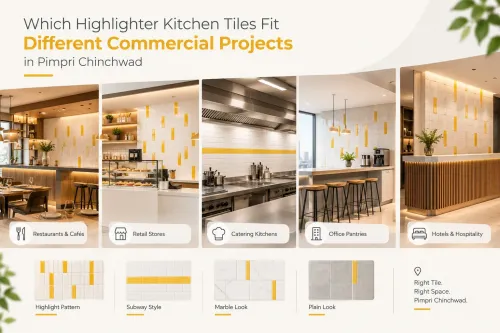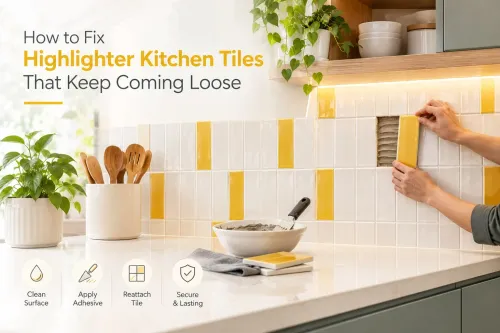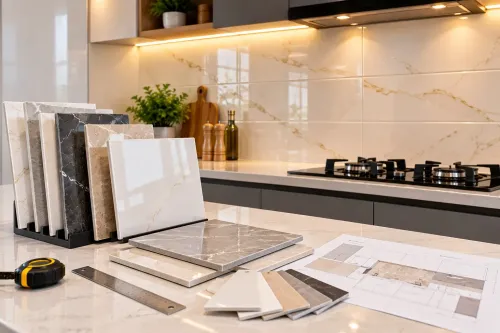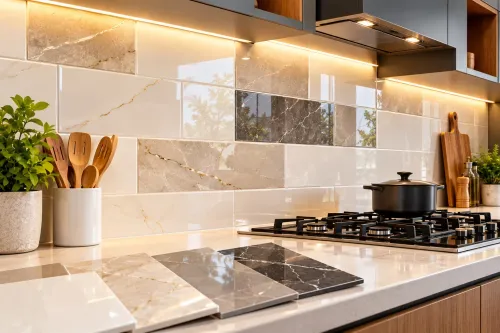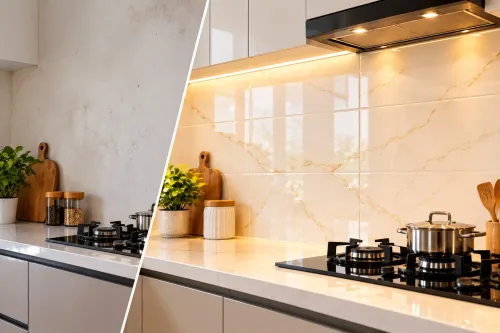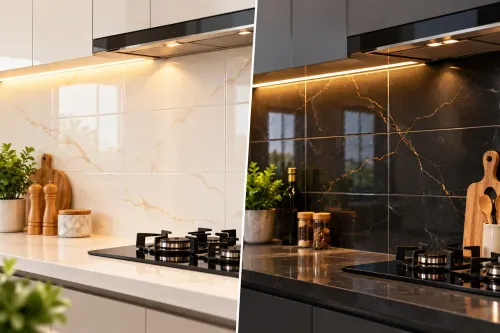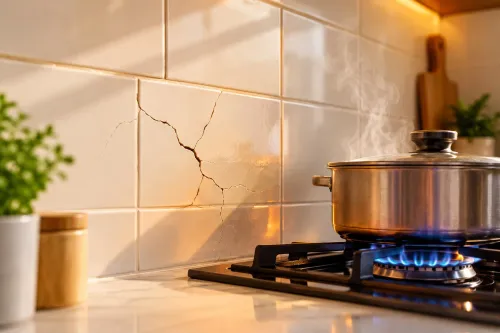
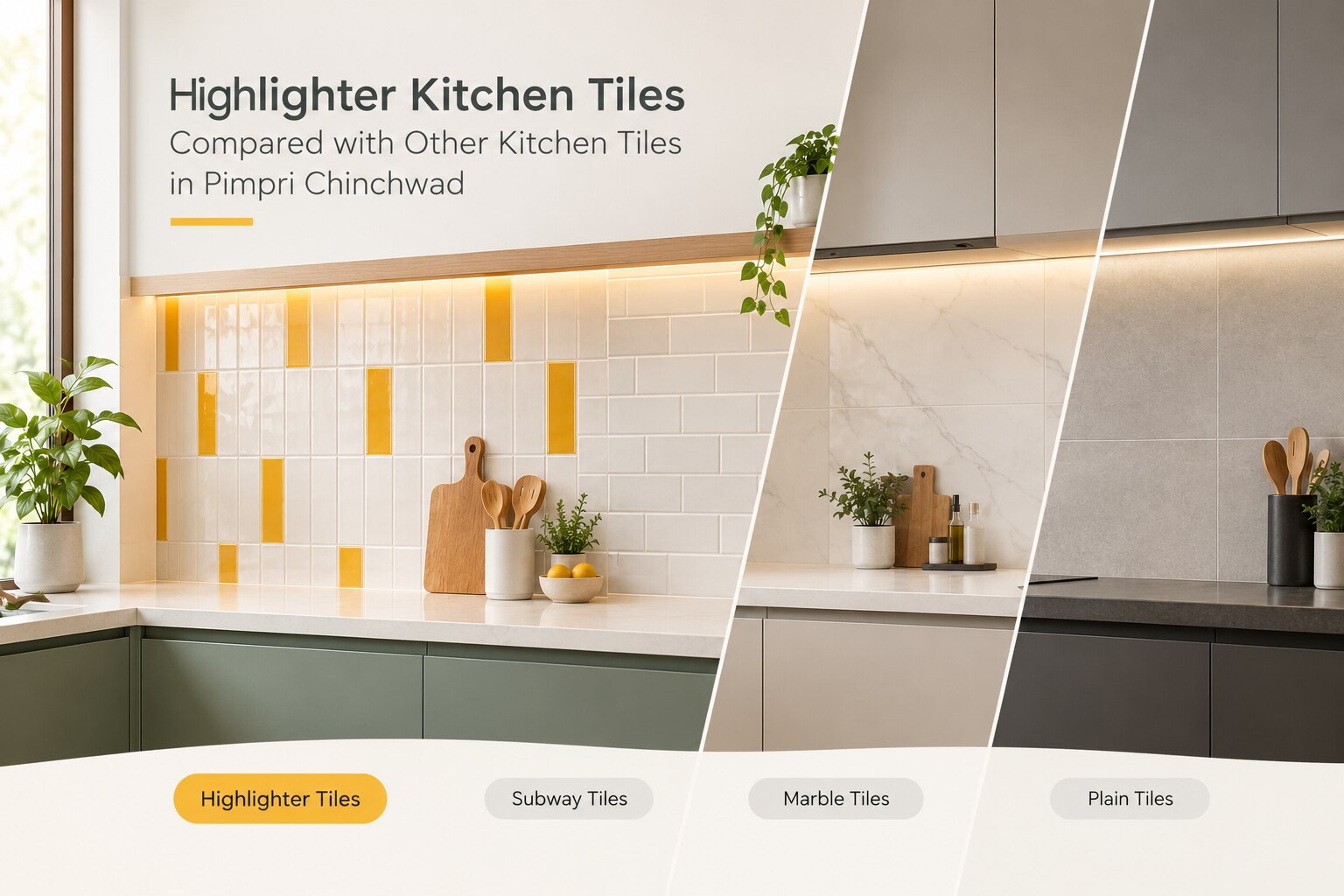
A highlighter tile is a visual treatment, not a technical tile class, so its suitability depends on the ceramic, porcelain, glass, stone, glaze, and finish beneath the design. Compare absorption, cleaning, slip performance, durability, installation demands, and replacement risk before deciding whether an accent belongs on your backsplash, wall, or floor.
Key takeaways
- Treat highlighter as an accent style, not a tile-performance category.
- Compare water absorption, body, finish, cleaning effort, and intended wall use.
- Use bold patterns on limited backsplash areas, not every kitchen surface.
- Confirm tile dimensions, shade batch, quantity, grout, and installation method before ordering.
What makes a highlighter tile different from a regular kitchen tile?
A highlighter tile is an accent tile, not a separate BIS or ISO class. It may be patterned, embossed, metallic-look, mosaic, strongly coloured, or relief-finished; a field tile is the quieter background tile that covers most of the wall. The word “highlighter” describes appearance, so judge the body, glaze, finish, and intended use separately.
| Tile type | Main role | Checks before pairing |
|---|---|---|
| Highlighter | Creates a focal strip, niche, or accent wall | Confirm water absorption, scratch resistance, cleanability, thickness, edge finish, and wall-use rating |
| Field tile | Provides the continuous background | Match size, thickness, shade, water absorption, glaze, and batch availability |
A useful highlighter tile comparison therefore asks whether both tiles can be installed on the same prepared surface without a step at the joint. A decorative kitchen tile comparison must also test maintenance: deep relief, crackle glaze, open joints, and irregular mosaics hold oil and masala residue more readily than smooth surfaces.
Coordinate these details before ordering:
- Keep module sizes and grout widths compatible; a 300 mm field tile beside a small patterned piece needs planned setting-out.
- Match thickness or specify a transition; uneven faces create dirt-catching ledges.
- Confirm both tiles suit the location. A wall highlighter is not automatically suitable for floors, wet slip exposure, or heavy abrasion.
- Plan trims or finished edges around outlets, corners, shelves, and window returns, where chipped cuts are most visible.
How do highlighter tiles compare with ceramic, porcelain, vitrified, subway, mosaic, glass, marble, and granite?
For highlighter kitchen tiles compared with other tiles in pimpri chinchwad, judge the tile body and finish, not the decorative label. A highlighter is usually a patterned, textured, metallic-look, or coloured accent tile; many are wall-rated only and unsuitable for floor traffic or wet slip exposure.
| Option | Water, stains, heat, and scratching | Slip, cleaning, life, and replacement |
|---|---|---|
| Highlighter ceramic | Moderate absorption; glaze resists stains, but relief collects grease. Handles normal wall heat; glaze can scratch. | Wall use is easiest to clean; grout needs attention. Long life indoors; matching replacements are difficult after a batch change. |
| Plain ceramic | Higher absorption than porcelain; sealed glaze resists stains and normal heat. Scratches sooner. | Good backsplash choice, not automatically a floor tile. Easy to cut and replace. |
| Porcelain | Very low absorption, strong stain and scratch resistance, and good heat tolerance. | Choose a documented slip-rated finish for floors; easy cleaning and long life, but cutting and matching replacements are harder. |
| Vitrified | Dense, low-absorption body with strong stain, scratch, and heat resistance. | Low-slip polished surfaces fail on wet floors. Durable and easy to clean; repairs need matching calibre and shade. |
| Subway | Shape, not a material; performance follows its ceramic or porcelain body. | Simple cleaning, but many grout joints increase maintenance. Replacement is usually straightforward. |
| Mosaic | Many joints resist large cracks but trap grease and stain. | Slip depends on surface; labour-intensive cleaning and replacement. |
| Glass | Non-porous and stain-resistant, reflective, but impact and cutting are risks. | Easy surface cleaning; textured grout is harder. Keep spare sheets for repairs. |
| Marble | Porous; food acids can etch it, and heat or scratches leave marks. | Needs sealing and pH-neutral cleaning; difficult, costly matching. |
| Granite | Dense, heat- and scratch-resistant, though finish controls slip. | Low maintenance and long-lived; replacement matching is difficult. |
For kitchen tile options in pimpri chinchwad, reserve cartons with the product code, shade, calibre, and grout colour before installation. A decorative batch can disappear before a repair is needed.
Where should you use highlighter tiles, and when are they the wrong choice?
Use highlighter tiles where they create a controlled visual feature rather than cover every surface. Suitable locations include:
- A backsplash strip between the countertop and wall cabinets
- A recessed niche for oils, spices, or display items
- A cooking-zone wall, when the surface is smooth and easy to wipe
- A breakfast counter wall that needs a stronger focal point
- A full-height accent wall away from direct splash and heavy grease
A useful highlighter tiles comparison starts with wall exposure, not appearance. Many decorative ceramic tiles suit vertical backsplashes but are not rated for floor traffic, abrasion, or wet slip conditions. Choose a floor tile with a documented use classification and slip-performance information instead of using a matching wall tile.
Highlighter tiles are the wrong choice when deep relief, crackle glaze, open joints, or irregular mosaics will trap oil and masala residue behind a hob. Smooth plain ceramic, porcelain, or vitrified tiles demand less wiping in that area; epoxy grout improves stain resistance but costs more and requires careful installation.
A decorative kitchen tile comparison must also include the finished edge. Around sockets, corners, shelves, and countertop junctions, chipped cuts and unsealed gaps become visible quickly. Use factory-finished edges, trims, or polished cuts where possible.
Choose plain or more durable tiles when a small kitchen already has patterned cabinets, stone, or bold flooring, or when the floor needs high slip resistance. A large-format field tile reduces grout maintenance, while a small highlighter creates more joints and installation work.
How should highlighter tiles coordinate with cabinets, countertops, grout, and kitchen lighting?
Choose the tile after viewing a full-size sample beside your cabinet door and countertop, not from a showroom board. A decorative kitchen tile comparison should include daylight and your actual warm artificial light, preferably around 2700–3000K; a colour that works at noon can look yellow or dull at night.
Use this selection method:
- White kitchens: choose a highlighter one or two tones deeper than the cabinet, then match grout to the field tile to keep the pattern controlled. Bright white grout makes every joint visible.
- Wood-look kitchens: balance timber’s warmth with cream, greige, or muted green. Avoid a red or yellow highlighter that competes with the wood grain.
- Coloured kitchens: keep the highlighter neutral, or repeat one cabinet colour in the pattern. Test both finishes together because adjacent saturated colours intensify each other.
- Dark kitchens: use a lighter highlighter and check shadowed corners under warm lighting. A very pale grout needs more cleaning, while dark grout can show mineral deposits.
Measure the backsplash, niche, and outlet positions before choosing pattern scale. Small mosaics suit narrow bands but create more grout; large patterns can lose their design at cuts. Among kitchen tile options in Pimpri Chinchwad, record the product code, shade, calibre, and grout colour, then reserve cartons from the same batch for repairs.
Verify that a decorative wall tile is not being specified for floor use.
What must you confirm before ordering and installing highlighter tiles in Pimpri-Chinchwad?
A sample alone cannot protect you from shade changes, chipped reliefs, or an impossible repair. For highlighter kitchen tiles compared with other tiles in Pimpri Chinchwad, confirm the records and installation method before payment.
1. Record the product code, shade number, calibre, finish, tile thickness, intended wall or floor use, and grout colour. Whether you buy from Shreya Marble or another supplier, keep the invoice and a photographed sample.
2. Reserve matching cartons from the same batch for future repairs. Decorative batches can change, leaving a replacement visibly different from the original wall.
3. Dry-lay the pattern at the hob, corners, sockets, and cabinet edges before fixing. Mark the setting-out so prominent motifs do not finish as narrow slivers.
4. Agree the grout-line width before cutting. Check that textured faces, mosaic sheets, and uneven edges can receive consistent joints, and specify where factory edges remain visible versus where cut edges are hidden.
5. Compare tile thickness with the adjoining field tile. A step at the border needs a planned transition, not extra grout; use the adhesive system recommended for the substrate and verify coverage by lifting trial tiles.
6. Place flexible movement sealant at corners, wall-to-counter junctions, perimeters, and changes of plane. Do not fill these joints with rigid grout.
For a useful highlighter tiles comparison, assess the installer’s previous textured work, straightness around outlets, clean relief cuts, grout cleanup, and adhesive coverage. Ask for a mock-up and references; a fast installer who only handles flat ceramic can damage uneven decorative tiles.
Related product
 | Kitchen Tiles Elevate Your Kitchen with Statement Style Highlighter tiles are the ultimate secret weapon for creating an impactful, custom-designed kitchen... View product → |
Frequently asked questions
What makes a highlighter tile different from a regular kitchen tile?
A highlighter tile is an accent tile defined by its pattern, colour, texture, relief, or decorative finish. It is not a separate BIS or ISO tile class, so you must check its body, glaze, finish, and intended use.
How do highlighter tiles compare with ceramic, porcelain, vitrified, subway, mosaic, glass, marble, and granite?
Ceramic, porcelain, vitrified, marble, and granite describe material or manufacturing categories, while subway and mosaic describe formats or layouts. Glass is a material and finish category. A highlighter tile can overlap with these options, so compare water absorption, durability, cleaning, installation, and appearance rather than treating the terms as equivalents.
Where should you use highlighter tiles, and when are they the wrong choice?
Use highlighter tiles on a backsplash band, behind a hob, inside a niche, or on a focal wall where a decorative surface adds value. Choose a quieter field tile when the pattern will compete with busy cabinets, stone veining, appliances, or limited kitchen lighting.
How should highlighter tiles coordinate with cabinets, countertops, grout, and lighting?
Match the tile to the fixed elements first, then choose grout that supports or deliberately contrasts with the pattern. Test samples under daylight and kitchen LEDs because metallic, glossy, embossed, and dark finishes change noticeably with light.
What must you confirm before ordering and installing highlighter tiles in Pimpri-Chinchwad?
Confirm the exact tile size, thickness, finish, intended wall application, shade and calibre, available batch, breakage allowance, corner pieces, grout colour, adhesive, delivery condition, and installation layout before placing the order.
Keywords